Artemis II - 2026
Return to
the Moon
Four astronauts.
One spacecraft.
Humanity's first crewed voyage beyond low Earth orbit in over 50 years - a nine-day journey around the Moon and back.
01 - Orion Spacecraft
The Vessel Beyond Earth
Orion is the most advanced crew capsule ever built - engineered to sustain four astronauts across more than a million kilometers of deep space. Its AVCOAT heat shield withstands 3,000°F on re-entry, the hottest human-rated return since Apollo.
02 - SLS Rocket
Infinite Thrust
The Space Launch System is the most powerful rocket ever flown. Twin five-segment solid boosters and four RS-25 engines generate more than 8.8 million pounds of thrust at liftoff - 15% more than the Saturn V.
03 - The Crew
Four Pioneers
Commander Reid Wiseman, Pilot Victor Glover, Mission Specialists Christina Koch and Jeremy Hansen - the first crew to journey beyond low Earth orbit in over half a century. Ten days. One spacecraft. A voyage that rewrites history.
04 - Lunar Flyby
Gravity's Slingshot
Artemis II follows a free-return trajectory - using the Moon's gravity to swing the crew around and back to Earth. At closest approach, Orion passes ~6,500 km above the far-side lunar surface, closer than any crewed vehicle since 1972.
05 - Navigation & Comms
Laser Link
For the first time in crewed spaceflight, Artemis II tests deep-space optical communications - a laser relay capable of 260 Mbps, over 100× faster than radio. Star trackers and autonomous guidance keep Orion on course across cislunar space.
06 - Re-Entry & Recovery
The Final Descent
Returning from lunar distance, Orion hits the atmosphere at 40,000 km/h - the fastest any crewed vehicle has traveled since Apollo. An eleven-chute sequence of drogues, pilots, and mains slows Orion to a 27 km/h splashdown in the Pacific.
Why It Matters
A turning point in space exploration.
In 2026, humanity returned to deep space for the first time in over half a century. Artemis II proved that the systems designed to carry astronauts to the Moon - and eventually Mars - actually work with humans aboard. It is not a rehearsal. It is the beginning.
The Crew
Four explorers.
One mission.
The first humans to voyage beyond low Earth orbit in over 50 years - a crew selected for skill, resilience, and the ability to push humanity's boundaries further than ever before.
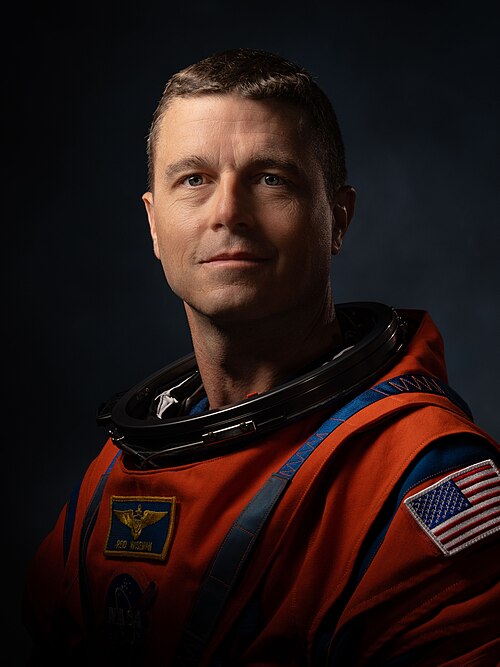
Reid Wiseman
Commander
NASA
U.S. Navy test pilot and former Chief of the NASA Astronaut Office. Selected in 2009, Wiseman logged 165 days in space as a flight engineer on Expedition 40/41 and performed two spacewalks totaling nearly 13 hours.
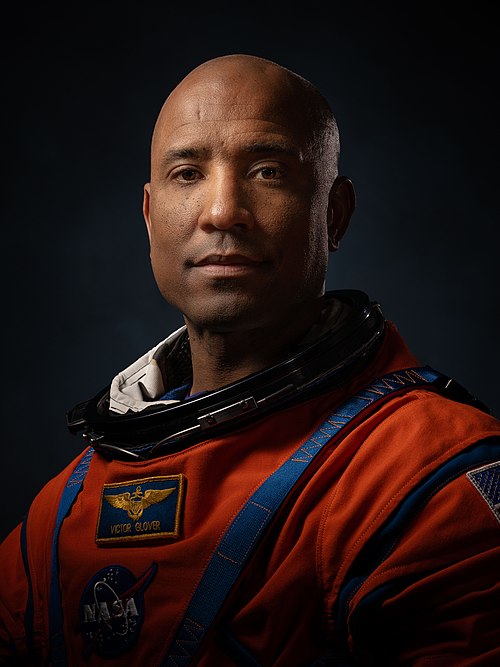
Victor Glover
Pilot
NASA
U.S. Navy F/A-18 pilot and test pilot. Glover served as pilot of SpaceX Crew-1 - the first operational crew flight of Crew Dragon - spending 168 days aboard the ISS with four spacewalks. First Black astronaut to journey beyond low Earth orbit.
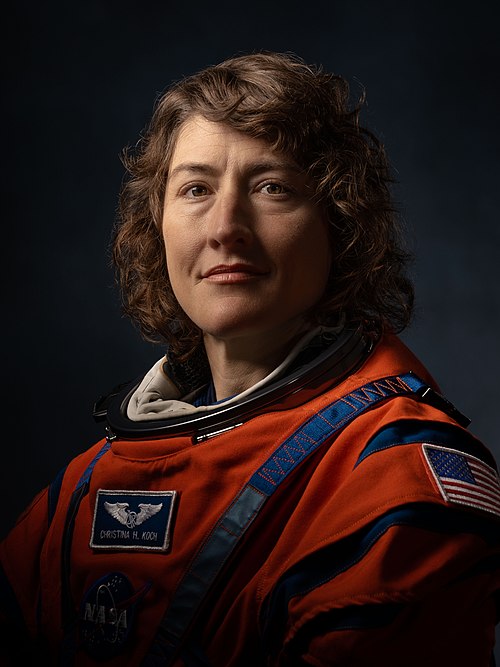
Christina Koch
Mission Specialist
NASA
Electrical engineer and ISS flight engineer who set the record for the longest single spaceflight by a woman - 328 consecutive days on Expeditions 59/60/61. She also conducted the first all-female spacewalk. First woman to journey beyond low Earth orbit.
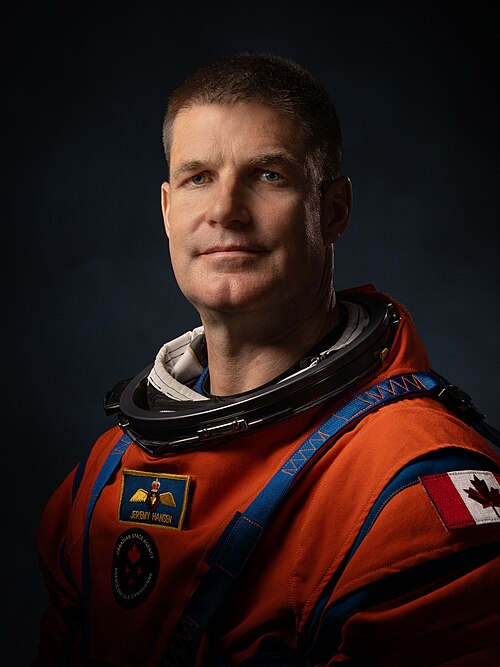
Jeremy Hansen
Mission Specialist
CSA
Royal Canadian Air Force CF-18 fighter pilot selected by the Canadian Space Agency in 2009. Artemis II is his first spaceflight, making him the first non-American astronaut to travel beyond low Earth orbit and the first Canadian to journey near the Moon.
Core Systems
What Makes
It Possible
Deep Space Life Support
ECLSS regenerates oxygen and scrubs CO₂ - keeping four crew alive beyond Earth's protective magnetosphere for over a week.
SLS Propulsion
Twin solid rocket boosters and four RS-25 engines deliver 8.8 million pounds of thrust - the most powerful launch system ever flown.
Orion Navigation
Autonomous star-tracker guidance and ground-based deep space network keep Orion precisely on its free-return trajectory.
Optical Communications
Laser-based relay transmits HD video and telemetry at 260 Mbps across 400,000 km - a 100× leap over radio.
Radiation Protection
Solar particle event shelter and real-time dosimetry protect crew from galactic cosmic rays and solar storms beyond the Van Allen belts.
Thermal Protection
AVCOAT ablative heat shield endures ~3,000°F during skip re-entry at lunar return speeds - the most extreme thermal environment for any crewed vehicle.
Where Is Orion
Mission Live.
Loading JPL ephemeris data...
Mission Elapsed Time
Mission Timeline
Liftoff - April 1
SLS clears the tower at Kennedy Space Center LC-39B with 8.8M lbs of thrust. SRB separation at T+2 min, core stage separation at T+8 min.
Earth Orbit & Checkout
ICPS fires to raise orbital perigee to 160 km. Orion orbits Earth twice while crew tests handling capabilities and systems.
Trans-Lunar Injection
European Service Module main engine fires with 6,000 lbs of thrust, sending Orion on a trajectory toward the Moon. First space-to-ground video call.
Outbound Trajectory Correction
First of three trajectory correction burns. Crew demonstrates CPR in microgravity and tests medical equipment. Deep Space Network emergency comms test.
Navigation & Photography
Second trajectory correction burn. Crew reviews target geography and photographs celestial bodies. Optical communications tests continue.
Lunar Sphere of Influence
Orion enters the Moon's gravitational sphere. Full morning of spacesuit testing - rapid donning, pressurization, eating through helmet port. Final outbound correction burn.
Lunar Flyby
Closest approach - Orion passes 6,400–9,600 km above the lunar surface. 30–50 min loss of signal behind the Moon. Crew photographs and records the far side.
Return Trajectory
Orion exits the lunar sphere of influence. First of three return trajectory correction burns. Crew given largely off-duty time for rest.
Radiation Shelter & Piloting
Crew constructs radiation shelter from onboard supplies. Manual piloting demonstrations - tail-to-Sun attitude maneuvers and attitude control mode testing.
Re-Entry Preparation
Crew studies re-entry procedures. Second return correction burn. Waste system demonstrations and orthostatic intolerance garment fitting.
Re-Entry & Splashdown - April 10
Final correction burn. Service module separation. Heat shield endures ~3,000°F. Two drogue chutes, then three main parachutes. Splashdown in the Pacific at ~27 km/h.